
There’s a lot to criticize about how technology and capitalism have affected textile arts (and every other aspect of our lives!). However, technology sometimes allows us to learn and discover things that we wouldn’t otherwise have access too.
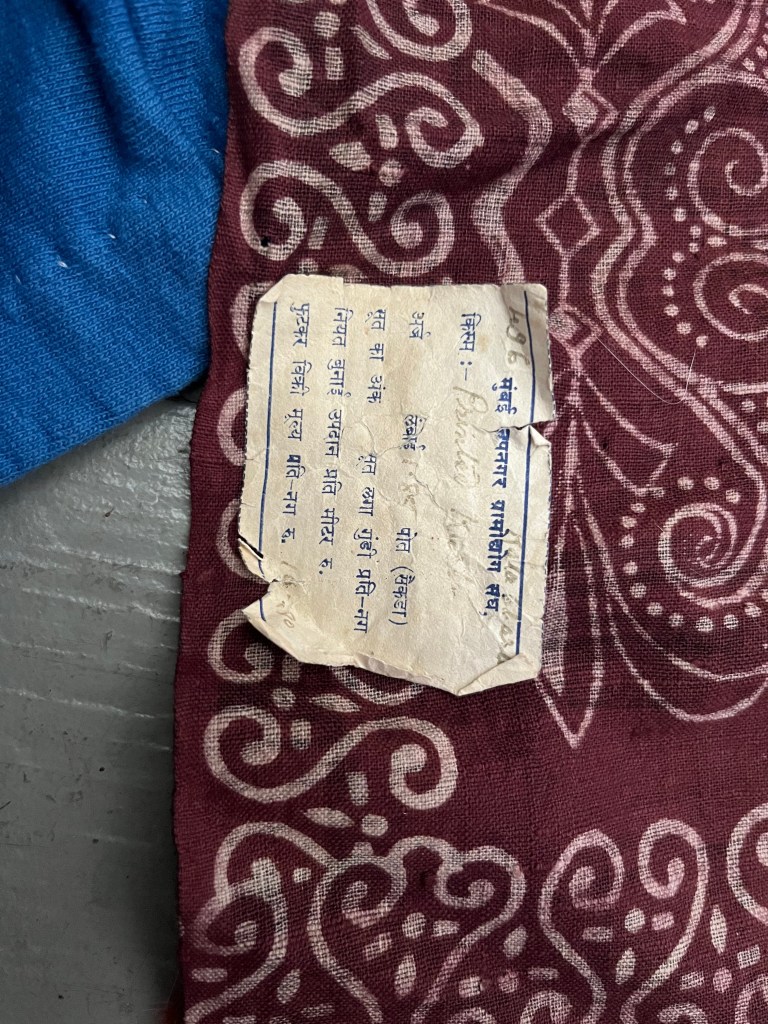
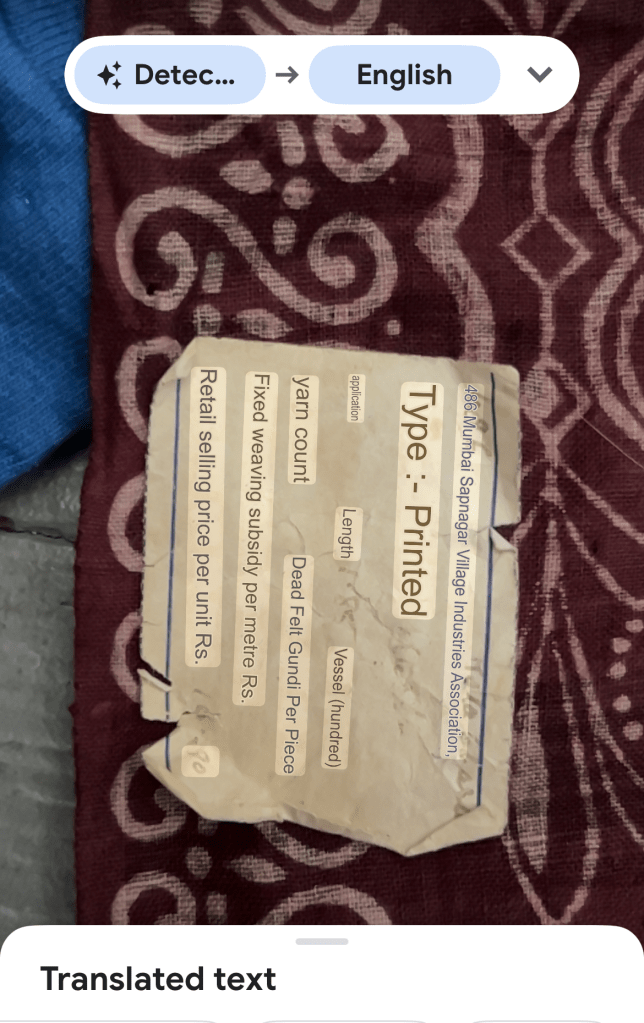
A gorgeous handmade cloth with an intricate printed design had been living in the “Handmade Fabrics from Around the World” bin at the The Fábrica. The cloth had a crispy, old-looking paper label affixed to one corner. With the help of a language translation app, we were able to take a picture of the label and discover more about the cloth. Of course, language translation apps are not always very accurate, but this is what we think we’ve learned:
First of all, the label is written in Hindi, using the Devanagari script. The cloth comes from the Mumbai Sapanagar Village Industries Association. Applying our own understanding of fabric production (weaving, dying and printing, etc.) to the words we see on the translation, it seems this label included places for the worker to write in various characteristics of the fabric. Those included thread count, cloth length, printing method, fabric content, dye lot, and retail price. Although the worker’s beautiful script can still be read in some places (the original piece was 1.85 meters), most of it has faded or worn away.
This translated label gives us a few answers about its origins, but there’s so much more to know about the making of a textile! How many people were involved? What is the Village Industry Association? How did the fabric end up in Santa Cruz? And so much more! What questions do you have about how a piece of cloth is made?
Discover more from The Fábrica
Subscribe to get the latest posts sent to your email.
 The Fábrica